Honest Comparisons
Manual vs Electric Breast Pump: Which Is Right for You?
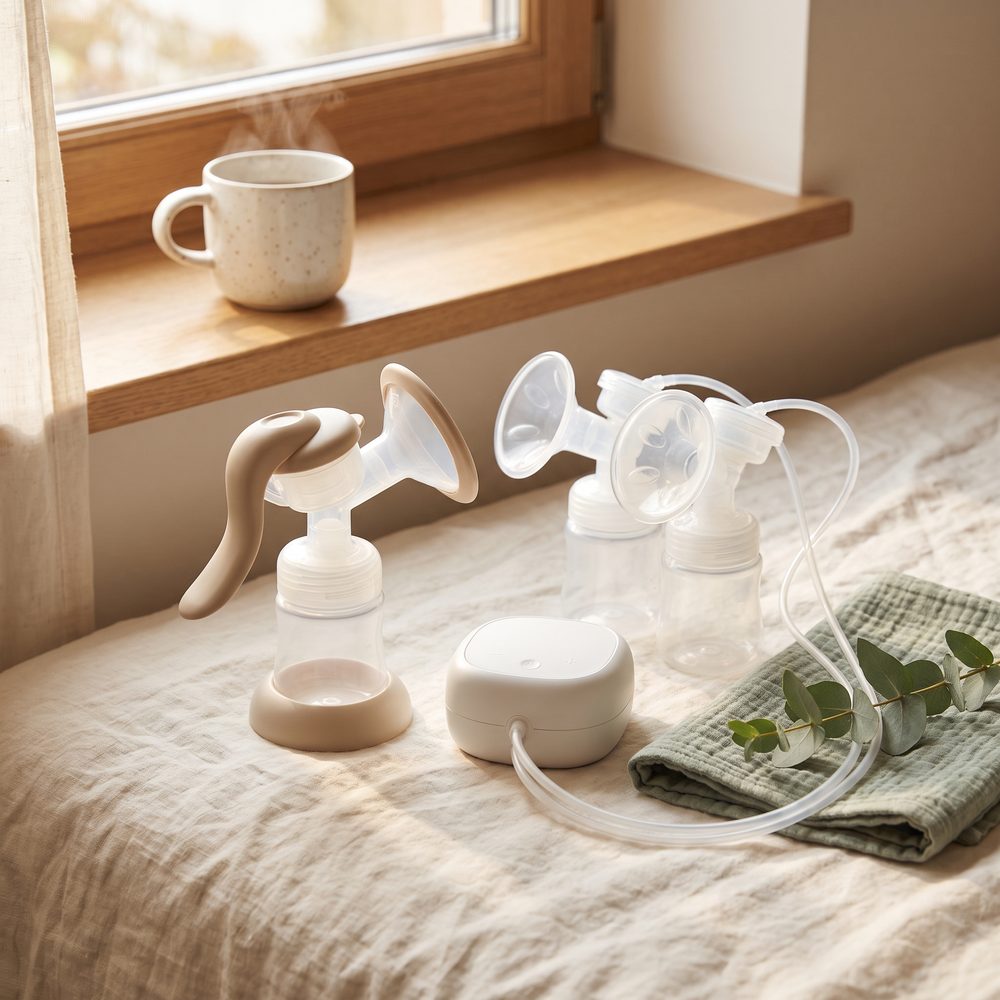
Two very different tools for the same job — the right one depends entirely on how you'll actually use it.
Walk down the pump aisle (or scroll it at 2 a.m.) and the choice looks simple: cheap little hand pump, or the plug-in kind everyone talks about. But "manual vs electric" isn't really a quality question — it's a how often and why am I pumping question. A manual pump can be the smartest $20 you spend, or a source of hand cramps and frustration, depending on the answer.
We haven't lab-tested every pump on the market, and we won't pretend to. This comparison is built from published specs, the way each type actually behaves in one-handed newborn life, and the honest feedback Mamas share about what they reach for and what ends up in a drawer. The goal is simple: help you know which to buy before you spend the money.
This post contains affiliate links. If you buy through them, we may earn a small commission — at no extra cost to you. We only point to things we'd actually tell a friend to consider.
The 30-second version
A manual breast pump is hand-powered, silent, cheap, and pocket-sized — perfect for occasional sessions, relief when you're engorged, or a travel backup. An electric breast pump does the work for you and can empty both sides at once, which is what makes daily and exclusive pumping actually sustainable. Most Mamas who pump regularly end up owning both — an electric as the workhorse and a manual for the car, the diaper bag, and the day the power's out.
Manual breast pumps: who they're for
A manual pump is a single flange with a hand lever. You control every squeeze, so you get a lot of say over rhythm and suction — and you also do all the labor. There are no batteries, no cords, and almost nothing to fail.
They shine for the Mama who's mostly nursing directly and only needs to pump now and then: to build a small stash, to relieve fullness, to leave a bottle for date night, or to hand-express in a pinch. The silicone Haakaa-style suction pump is a cousin worth knowing about — it isn't a "pump" so much as a suction cup that catches letdown on the other side while baby nurses, and it's a beloved way to collect milk you'd otherwise lose. A classic lever-style manual pump like the Medela Harmony gives you more control when you actually need to remove milk, not just catch it.
The honest cons: your hand will get tired, especially past five or ten minutes. It's one side at a time, so a full session takes longer. And it simply doesn't have the consistency — the sustained, cycling suction — that most people rely on to pump efficiently day after day. For occasional use that's a non-issue. For everyday or exclusive pumping, it becomes a grind fast.
Electric breast pumps: who they're for
An electric pump uses a motor to create cycling suction, usually with adjustable speed and strength, and most let you pump both breasts at once with a double-pump kit. Double pumping roughly halves your time at the pump — a real gift when you're squeezing sessions between feeds, feeds between naps, and naps between everything else.
This is the category for the Mama returning to work, exclusively pumping, building a freezer stash on a schedule, or feeding a baby who isn't latching well. If you're going to pump most days, the motor earns its keep. Within electric, you've got choices: a plug-in standard electric pump for at-home consistency, a cordless wearable pump that tucks into your bra so you can pump hands-free, and — for supply challenges — a rented hospital-grade pump. We go deeper on the pod-style options in our wearable vs traditional breast pumps guide, and compare two of the biggest names head-to-head in Spectra vs Medela.
The honest cons: they cost more (often a lot more), they hum, they need power or charging, and there are more parts to wash and eventually replace. Wearables trade some suction strength and output for the freedom of going hands-free, and cheaper motors can weaken over months of daily use. More convenience, more money, more maintenance — that's the deal.
Whichever pump you pick, you still have to feed yourself.
Grab our free sample of make-ahead, one-handed meals built for pumping-and-nursing days — no cooking, no free hand required.
Get the free sample →Manual vs electric: side by side
| What matters | Manual pump | Electric pump |
|---|---|---|
| Best for | Occasional pumping, relief, travel backup | Daily, exclusive, or return-to-work pumping |
| Power | Your hand — works anywhere | Plug-in or rechargeable battery |
| One or both sides | One side at a time | Single or double (double = faster) |
| Speed of a session | Slower; hand fatigue sets in | Faster, especially double pumping |
| Noise | Silent | Audible hum (varies by model) |
| Price range | $ (roughly $15–40) | $$–$$$$ (roughly $80–350+) |
| Upkeep | Few parts, little to replace | More parts, tubing/valves wear out |
| Portability | Tiny, tosses in any bag | Bigger; wearables are the exception |
Ranges are general and vary widely by brand and retailer — check current listings before you buy.
The verdict, by how you'll actually use it
Don't forget the supporting cast
The pump is only half of a working setup. A few inexpensive extras make either type far less of a chore:
- A hands-free pumping bra — holds the flanges so you can eat, scroll, or rest instead of gripping bottles for 20 minutes.
- Milk storage bags — lay them flat to freeze so your stash stacks like books. (See our note on how long frozen food actually keeps — the same freezer-organization logic applies to milk.)
- The right flange size — the single most overlooked comfort fix. The wrong size makes any pump miserable; getting sized (an IBCLC can help) changes everything.
- A stash of pump wipes for quick between-session cleanups on the go.
Frequently asked questions
Can I exclusively pump with just a manual pump?
You can, but very few Mamas find it sustainable. Emptying one side at a time by hand, six to eight times a day, is a lot of work and a lot of hand fatigue. If you know you'll be pumping most feeds, a double electric will make the schedule far more livable. Keep a manual as your backup, not your main.
Does a manual or electric pump remove milk "better"?
Neither is universally better — it depends on fit, comfort, and consistency, which vary from body to body. Milk removal and supply are individual and influenced by many things, so if you're worried about how much you're getting out, that's a great question for an IBCLC or your provider rather than a spec sheet.
Do I really need a double pump?
If you pump often, double pumping is mostly about time — it can roughly halve how long you're attached to the pump. For occasional relief or the rare bottle, single (or manual) is perfectly fine.
Is a wearable pump strong enough to be my only pump?
For some Mamas, yes; for others it's a hands-free second pump paired with a stronger traditional one. Output and suction vary by model and by person. Our wearable vs traditional breakdown walks through the trade-offs.
What actually makes pumping more comfortable?
Correct flange size first, then a gentler suction setting and a hands-free bra so you're not hunched and gripping. If pumping hurts, stop chasing suction strength and check your fit — pain is a signal, not a requirement.
The bottom line
There's no single "best" pump — there's the best pump for your situation. Nursing directly and just want a backup? A manual is a cheap, smart yes. Heading back to work or pumping around the clock? An electric double pump is what makes that doable. Plenty of Mamas own one of each and never regret it. Whatever you choose, get sized, keep it simple, and remember the pump is a tool in service of a bigger goal: a fed baby and a Mama who's also taking care of herself.
On that last part — a stocked kitchen makes pumping days survivable. That's exactly what we build: 10 Make-Ahead Meals to start, a Recipe Vault of nursing-friendly recipes, and a breastfeeding station setup that keeps food and water within arm's reach of every session. Prefer paperback? The full Nourished Mamma Cookbook is on Amazon.
Nourishment in your inbox every Tuesday
Recipes, research, and real-Mama Q&A. Try the Weekly for $1 your first month.
See the Weekly →This article is educational and not medical advice. For questions about milk supply, pumping, or your recovery, please talk to your healthcare provider or an IBCLC. As an Amazon Associate we earn from qualifying purchases.