Honest Comparisons
Wearable vs Traditional Breast Pumps: Which Is Right for You?
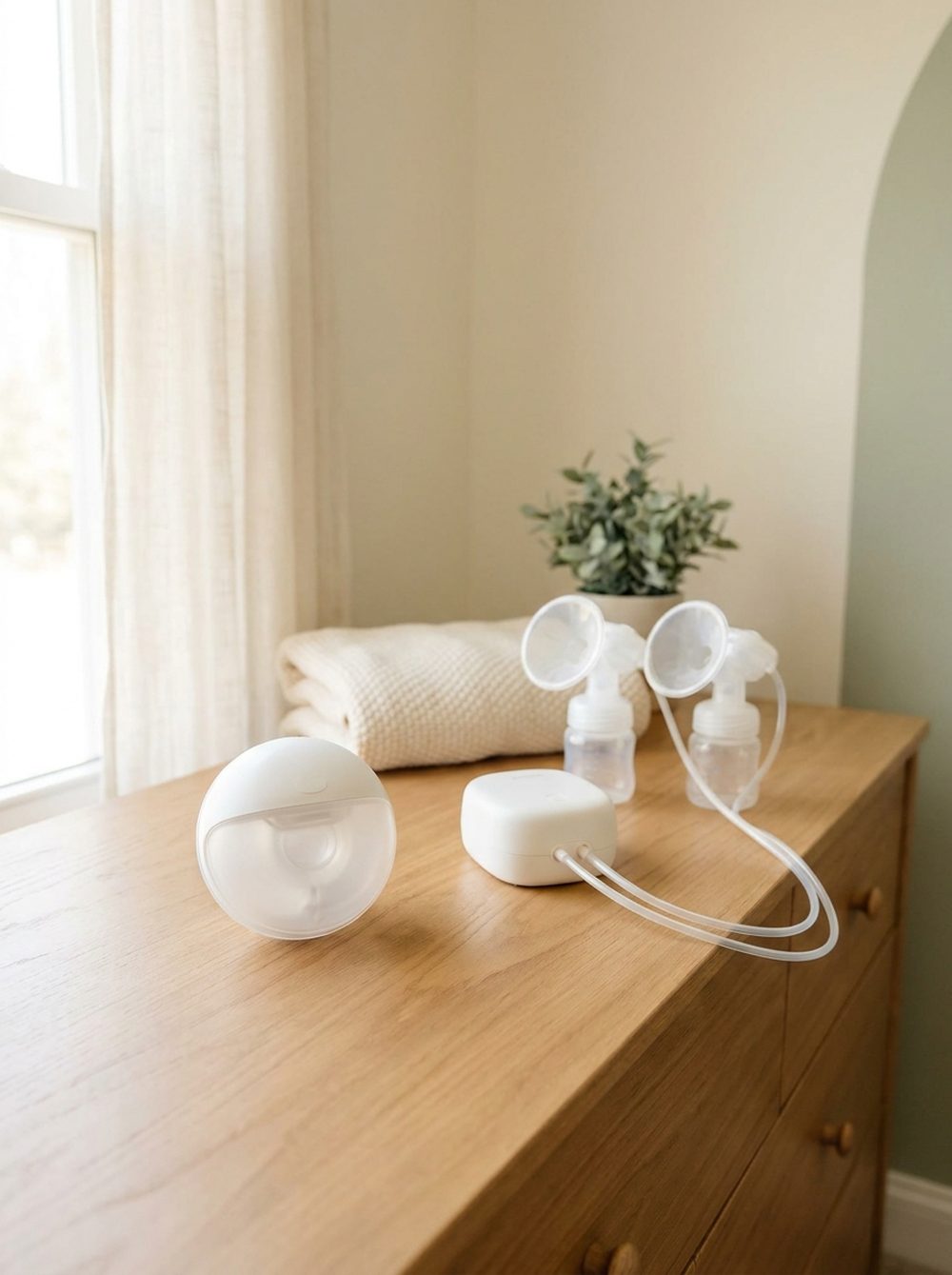
Two very different tools for the same job — and the right one depends on your life, not the marketing.
Somewhere in your third trimester (or at 2 a.m. with a six-day-old), you'll hit this question: do I get the sleek, tube-free wearable pump every influencer wears inside her bra — or the "hospital-style" workhorse with the bottles and the tubes? They can be a $100–$500 decision, insurance may only cover one, and the honest answer is that neither is better — they're built for different lives.
Full transparency: we haven't lab-tested pumps ourselves. This comparison is based on manufacturer specs, thousands of owner reviews, and what actually matters for one-handed newborn life — the same lens we bring to everything at Nourished Mamma. For anything about your supply, flange sizing, or pumping plan, an IBCLC (lactation consultant) is the real expert — many insurance plans cover a visit.
This post contains affiliate links. If you buy through them, we may earn a small commission — at no extra cost to you. We only point to things we'd actually tell a friend to consider.
The short version
Traditional pumps move milk more effectively for most Mamas. Wearables move you more freely. If pumping is a core part of how your baby eats — exclusive pumping, building a freezer stash, back to work with long sessions — a traditional pump is the safer buy. If pumping is the thing you squeeze around toddlers, commutes, and a life that won't sit still for 20 minutes, a wearable can be the difference between pumping and not pumping at all.
Traditional pumps: the workhorses
These are the classic setups — a motor unit, tubing, flanges, and bottles. Think Spectra S1 Plus (rechargeable, night light, beloved by exclusive pumpers) or the Medela Pump In Style (the insurance-list staple that's been in a million diaper bags).
Who they're for
- Exclusive pumpers — when the pump is baby's whole food supply, stronger, adjustable suction and reliable output matter more than anything.
- Stash builders and back-to-work Mamas with a door that closes and 15–20 minutes of sit-down time.
- Budget watchers — most insurance plans fully cover a traditional pump; wearables are often an upgrade fee.
Honest downsides
- You're tethered. Even "portable" versions keep you attached to tubes and bottles — nobody chases a toddler mid-session.
- More parts to wash, every single time. The sink pile is real.
- They're loud enough that everyone on the conference call knows.
- You mostly need two hands to set up and detach — the exact thing you don't have. (A hands-free pumping bra is a near-mandatory $20 add-on.)
Wearable pumps: freedom, with fine print
Wearables tuck entirely inside your bra — no tubes, no bottles, no sitting down. The premium names are Elvie and Willow (both ~$300–$550/pair), with Momcozy owning the budget lane at roughly a third of the price — the value pick in thousands of owner reviews.
Who they're for
- Second-time (and beyond) Mamas — you literally cannot tell a toddler to wait 20 minutes. Pumping while making lunch is the whole point.
- Commuters and desk-sharers — no pumping room? A wearable under a sweater is quiet and invisible.
- Occasional pumpers — if you mostly nurse and pump a few times a week, convenience beats maximum output.
Honest downsides
- Most Mamas get less milk per session than with a strong traditional pump. Owner reviews say this consistently, and it matters a lot if you're exclusively pumping.
- Getting the fit right is fussier — misaligned cups can mean a whole session's milk on your shirt. Sizing help from an IBCLC pays for itself here.
- Capacity is capped (usually 4–5 oz per side), and you can't always see how it's flowing.
- More expensive out of pocket, batteries age, and there are still parts to wash — they're just smaller and easier to lose.
Pumping session done — now feed yourself, Mama.
Grab a free sample of our make-ahead meals built for one-handed newborn life. Instant download.
Get the free sample →Side by side
| Traditional (Spectra, Medela) | Wearable (Elvie, Willow, Momcozy) | |
|---|---|---|
| Typical cost | $0 through insurance · $160–$250 retail | $100–$550; often an insurance "upgrade" fee |
| Output for most users | Stronger, adjustable — the benchmark | Usually somewhat less per session |
| Mobility | Tethered to tubes + bottles | Fully in-bra, walk-around-the-house free |
| Noise | Audible motor hum | Quiet enough for meetings |
| Parts to wash | More, bigger | Fewer, smaller (easier to misplace) |
| Learning curve | Simple, hard to get wrong | Fit + alignment take practice |
| Best for | Exclusive pumping, stash building | Multitasking, commuting, discreet pumping |
The verdicts
Best for exclusive pumpers: a traditional pump, full stop — most owners report better output, and output is the job. The Spectra S1 is the community favorite for a reason.
Best on a budget: whatever your insurance covers free (usually a Medela or Spectra). If you want wearable freedom without the premium price, Momcozy is the value play.
Best for back-to-work: honestly? Many working Mamas end up with both — a traditional pump anchored at their desk and a wearable for the commute and meeting-heavy days.
Best for chasing a toddler: wearable. The "less output" trade-off doesn't matter if the alternative is skipping the session entirely.
Skip both if: you nurse directly and just want to catch letdown from the other side — a simple Haakaa silicone pump ($15) collects milk passively with zero motor, zero parts, zero learning curve.
Whichever you choose, set the station up right
The pump is only half the system. You'll also want milk storage bags, a drying rack that keeps pump parts off the counter, and — trust us — water and one-handed snacks within reach of wherever you pump. We wrote a whole guide to setting up a breastfeeding station that actually works, and pumping makes you just as thirsty as nursing does — here's how to stay hydrated without thinking about it.
And if you're comparing gear before baby arrives, our nursing pillow comparison walks the same honest line: who each one is for, and what the boxes don't tell you.
Quick answers
Do wearable pumps really get less milk?
For many Mamas, somewhat less per session than a strong traditional pump — that's the most consistent theme in owner feedback. Fit matters enormously, though; a well-fitted wearable can outperform a badly fitted traditional pump. If output worries you, an IBCLC can check your flange size and technique.
Will insurance cover a wearable pump?
Most U.S. plans fully cover a standard traditional pump, and many let you put that credit toward a wearable and pay the difference. Check your plan's durable-medical-equipment supplier before you buy retail.
Can I start with one and add the other later?
Absolutely — and it's the most common path. Take the free insurance pump now; if real life demands hands-free, add a budget wearable later once you know how often you actually pump.
Is a Haakaa a real substitute for a pump?
Not for building a stash or replacing feeds — it's a passive collector, not a motor. But for catching letdown while you nurse, it's the best $15 in the game.
What about manual pumps?
A manual pump is a great glovebox/diaper-bag backup for engorgement or a missed session — cheap, silent, never needs charging. Just don't make it your primary if you pump daily; your hand will file a complaint.
Nourishment in your inbox every Tuesday
Recipes, research, and real-Mama Q&A — written for the season you're in. Try the Weekly for $1 your first month.
See the Weekly →This article is educational and not medical advice. For questions about your milk supply, flange sizing, or pumping plan, please talk to an IBCLC or your healthcare provider. As an Amazon Associate we earn from qualifying purchases.