Mama Questions
How Long Do Freezer Meals Last?
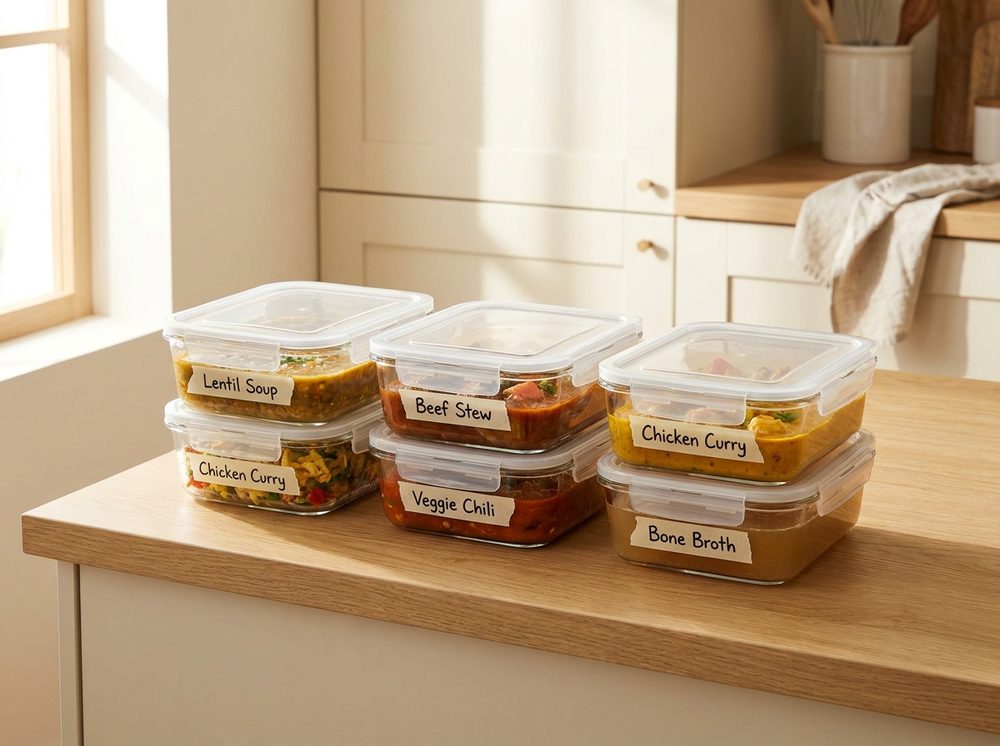
Labeled, dated, and stacked like books — the way a freezer stash actually gets eaten.
Quick answer: Most cooked freezer meals keep their best flavor and texture for about 3 to 4 months when frozen at 0°F (-18°C) in airtight containers. Kept constantly frozen, they stay safe to eat far longer than that — the month ranges are about quality, not safety. Label and date everything, and you'll always know what to grab first.
When you're building a stash of meals to get you through the newborn fog, the question isn't just "will this feed me later" — it's "will it still taste good, and is it still okay to eat?" Good news: freezing is one of the most forgiving ways to store food. Below is a plain-English guide to how long different freezer meals last, how to store them so they actually taste like food when you reheat them, and how to build a stash that lasts through those first few weeks.
This post contains affiliate links. If you buy through them, we may earn a small commission — at no extra cost to you. We only point to things we'd actually tell a friend to get.
The short version: a freezer storage chart
These are best-quality windows for food frozen at a steady 0°F. Past these ranges the food is usually still safe if it's stayed frozen the whole time — it just won't taste as fresh.
| Freezer meal | Best quality |
|---|---|
| Soups, stews, chili, broth | 3–4 months |
| Cooked casseroles & baked pasta | 2–3 months |
| Cooked meat & poultry (in a dish) | 2–6 months |
| Cooked grains & beans | 3–6 months |
| Muffins, oat bites, baked goods | 2–3 months |
| Raw poultry (whole/pieces) | up to 9 months |
| Raw beef, pork, lamb cuts | 4–12 months |
| Ground meat, raw | 3–4 months |
The single best way to hit these windows every time is to store meals airtight and label them. A stack of glass meal-prep containers or a box of heavy-duty gallon freezer bags plus a roll of removable freezer labels does 90% of the work.
Mama Questions, answered
How long do soups and stews last in the freezer?
Soups, stews, chili, and broths keep well for 3 to 4 months — and they're the freezer's all-stars. Because they're liquid-based, the broth surrounds the ingredients and keeps air off them, which fends off freezer burn better than almost anything else. Freeze them flat in gallon freezer bags so they stack like books, or portion them into silicone freezer trays for grab-one-bowl servings.
How long do casseroles and baked dishes last frozen?
Cooked casseroles, lasagna, and baked pasta keep about 2 to 3 months at best quality. Dishes loaded with dairy or cheese can turn a little grainy sooner, so eat those on the earlier end. Wrap them tightly — a layer of foil over the lid, or a freezer bag around the whole dish — to keep air out.
How long can I freeze cooked and raw meat?
It depends on the cut. Cooked meat and poultry keep roughly 2 to 6 months; raw steaks, chops, and roasts hold 4 to 12 months, and raw poultry keeps up to about 9 months. Ground meat is the shortest — plan to use it within 3 to 4 months. A vacuum sealer stretches those windows by pulling out the air that causes freezer burn.
Do freezer meals actually go bad, or just lose quality?
Kept constantly frozen at 0°F, food stays safe to eat almost indefinitely — freezing pauses the bacteria that spoil food, it doesn't just slow them. What changes over the months is quality: flavor fades, texture dries out, moisture escapes. So those chart numbers are "still tastes great by" dates, not "throw it out after" deadlines. When in doubt about any food's safety, though, trust your senses and your provider's guidance over a chart.
What is freezer burn, and how do I prevent it?
Freezer burn is those dry, grayish, leathery patches that show up when air reaches the food and the surface moisture evaporates. It's safe to eat — it just tastes flat and dry. Prevent it by pressing the air out of bags before sealing, filling containers close to the top (less air space), wrapping tightly, and using true freezer-grade containers rather than thin takeout tubs. A keep-your-freezer-honest trick: an inexpensive freezer thermometer tells you if yours is actually holding 0°F.
What's the best container for freezing meals?
Airtight and freezer-safe beats everything. Three that earn their space: glass meal-prep containers that go freezer-to-microwave, reusable silicone freezer bags you can lay flat, and silicone freezer trays for single-portion soups and sauces. Whatever you use, the job is the same: keep air out, seal moisture in.
Should I label and date my freezer meals?
Yes — every single time. Write the dish name, the date frozen, and quick reheating instructions right on the label. Without a date you're playing freezer roulette; with one, you always know what to eat first. And honestly, the meals that get labeled are the meals that actually get eaten instead of buried in the back. A roll of removable labels and a fine-point permanent marker kept in the kitchen drawer make this a five-second habit.
Skip the guesswork — get the meals already planned.
10 Make-Ahead Meals for New Mamas: freezer-friendly, one-handed, and built to batch. Portion sizes, labels, and reheating notes done for you.
Shop the guide →How do I safely thaw a freezer meal?
The safest route is the slow one: move it to the refrigerator the night before and let it thaw overnight. Need it faster? Thaw in the microwave and cook it right away, or set a sealed bag under cold running water. The one to avoid is leaving it on the counter — the outside creeps into the unsafe temperature range while the middle is still a brick. Soups and stews are lovely here because you can often reheat them straight from frozen in a pot.
Can I refreeze a meal I already thawed?
Usually yes, if it was thawed in the fridge and stayed cold the whole time — though the texture may take a small hit. What you shouldn't refreeze is anything that sat out at room temperature for more than two hours. When it doubt, cook it and eat it rather than sending it back to the freezer.
When should I make postpartum freezer meals before baby comes?
The last four to six weeks of pregnancy is the sweet spot. Meals frozen then are still comfortably inside their 3-to-4-month quality window all the way through the newborn weeks. If nesting hits earlier and you want to start sooner, lean into soups, stews, and chili — they hold their quality the longest. (Not sure what to cook? Our postpartum freezer meals guide walks through the whole batch-day plan.)
What foods freeze well, and what should I skip?
Freeze with confidence: soups, stews, chili, cooked grains and beans, shredded proteins, egg muffins, oat bites, and most casseroles. Skip or expect trouble: crisp raw veggies (they go limp), plain cooked pasta on its own (mushy), fried foods (soggy), and cream-based sauces (they can split or turn grainy). If a recipe leans heavily on fresh crunch or a delicate cream sauce, it's happier made fresh.
How do I organize a freezer so meals actually get eaten?
Freeze flat, then stand meals up like files so you can read every label at a glance — a couple of freezer storage bins turn a chaotic drawer into "dinners" and "breakfasts." Keep the oldest meals in front so they get used first, and jot a running list of what's in there on the door. A stash you can actually see is a stash that feeds you.
The real goal: dinner, handled
Here's the thing no chart tells you — the point of a freezer stash isn't perfect food science. It's opening the freezer at 6pm with a baby on your chest and finding a real, warm meal waiting, no cooking required. Store it airtight, label it, eat the oldest first, and you're set. If you want the actual meals mapped out for you, that's exactly what we make: 10 Make-Ahead Meals to start your stash, the Recipe Vault of 50 nursing-friendly recipes for your whole first year, and the postpartum kitchen starter kit if you're still gathering your gear. Setting up the spot where you'll actually eat? Our breastfeeding station essentials post has you covered.
Nourishment in your inbox every Tuesday
Recipes, research, and real-Mama Q&A. Try the Weekly for $1 your first month.
See the Weekly →This article is educational and not medical or food-safety advice for your specific situation. Storage windows are general best-quality guidelines based on freezing at 0°F (-18°C); when in doubt about whether a food is safe, throw it out or check current USDA food-safety guidance. For questions about your nutrition or recovery, please talk to your healthcare provider or an IBCLC. As an Amazon Associate we earn from qualifying purchases.