Honest Comparisons
Haakaa vs Breast Pump: Which Do You Actually Need?
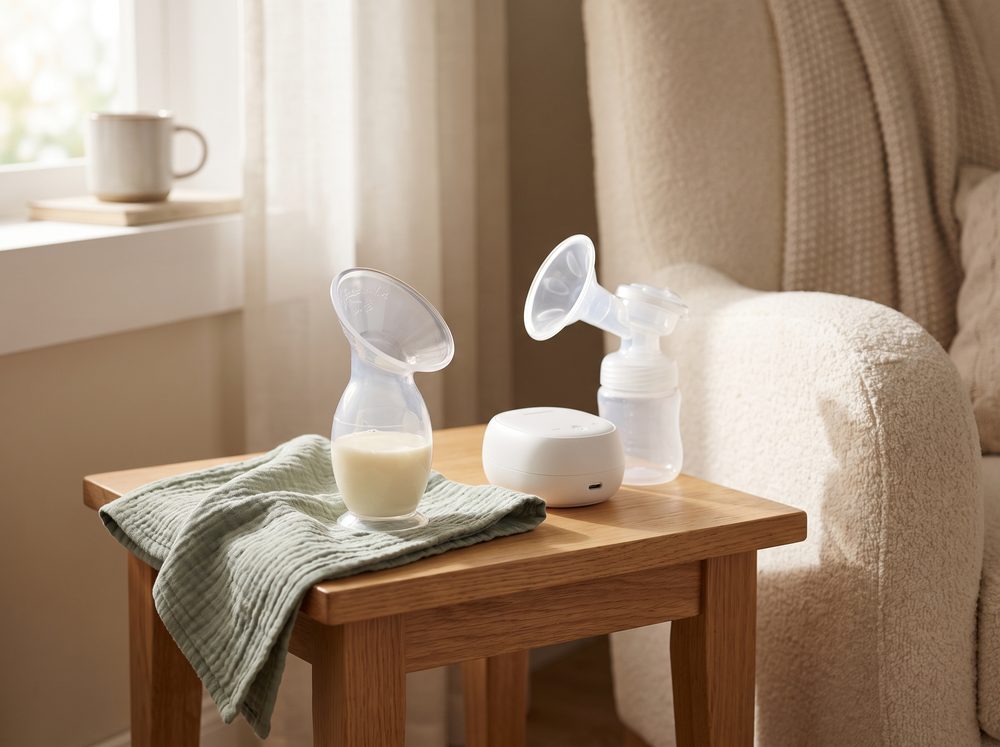
A silicone collector and a real pump do two different jobs — most Mamas end up wanting both.
They both end up holding milk, so they get lumped together in the same "pumping" aisle — but a Haakaa-style silicone collector and an actual breast pump solve very different problems. One catches milk you'd otherwise lose. The other removes milk on purpose. Knowing which job you're actually trying to do is the whole game, and it's the difference between a $15 buy and a $200 one.
This post contains affiliate links. If you buy through them, we may earn a small commission — at no extra cost to you. We only point to things we'd actually tell a friend to get. This is based on product specs, how each tool is designed to be used, and what nursing Mamas consistently report — not on lab testing we ran ourselves.
The 30-second version
A Haakaa (silicone milk collector) suctions onto the other breast while baby nurses and passively catches your letdown — the milk that would otherwise soak a nursing pad. It has no motor and no settings. A breast pump — manual or electric — actively pulls milk out with rhythmic suction, so you can build a stash, feed with bottles, or keep supply up when you're away from baby. If you want to stop losing your letdown, get the collector. If you need to make and store milk without baby at the breast, you need a pump. Plenty of Mamas keep both.
The Haakaa (silicone collector): who it's for
The original silicone Haakaa is one soft piece of food-grade silicone. You squeeze the base, pop it onto the breast baby isn't using, and gentle suction plus your natural letdown do the rest. It's silent, cheap, dishwasher-simple, and packs flat.
It shines when:
- You're leaking on the opposite side every feed and hate wasting it.
- You want to slowly build a small freezer stash without adding a "pumping session" to your day.
- You want one hands-light thing that lives on the nursing table (set up your whole spot with our breastfeeding station essentials).
- You're early postpartum, engorged, and want gentle relief.
Honest cons:
- It's a catcher, not a pump. It relies on your letdown reflex — it won't reliably "empty" a breast or pull milk on command the way a pump does.
- Output is unpredictable. Some Mamas fill it every feed; others get an ounce. It depends on your letdown, not a dial.
- It tips. The classic one-piece has no wide base by default — a knocked-over Haakaa is a genuinely sad moment. A version with a suction base and lid is worth the couple extra dollars.
- Not a supply tool. If you're exclusively pumping or worried about supply, a collector isn't the answer — that's a pump-and-IBCLC question.
The breast pump: who it's for
A pump actively expresses milk with cycling suction, whether that's a simple manual pump you work by hand or a double electric that does both sides while you sit. It's the tool for when milk has to come out on a schedule — daycare bottles, a work shift, a night away, or keeping supply steady when you and baby are apart.
It shines when:
- You're heading back to work and need bottles ready.
- You want a real freezer stash on a timeline, not "eventually."
- Someone else is doing a feed and you need to express to stay comfortable.
- You're exclusively pumping, or pumping is a regular part of your routine.
Honest cons:
- More money and more parts. Flanges, valves, membranes, tubing — things to wash, size, and eventually replace. Getting your flange size right matters a lot for comfort and output.
- It's a task. A pump session is time you're actively attached — not passive like a collector.
- Noise and setup. Electrics hum; there's assembly and cleanup each time.
- Choice overload. Manual, wearable, traditional, hospital-strength — the options are a lot. We break the big forks down in manual vs electric and wearable vs traditional.
Between feeds, feed yourself too.
Pumping and catching milk is thirsty, hungry work. Our Hydration & Snack Station printable sets up the one-handed spot that keeps you fueled while you do it.
See the printables →Haakaa vs pump: side by side
| What matters | Haakaa (silicone collector) | Breast pump |
|---|---|---|
| What it does | Passively catches letdown from the other side | Actively expresses/removes milk on demand |
| Best for | Saving leaked milk, gentle relief, slow stash | Stash-building on a timeline, bottles, work, EP |
| Power | None — suction + your letdown | Your hand (manual) or motor (electric) |
| Control over output | Low — depends on your letdown | Higher — settings, cycles, double pumping |
| Hands-free? | Mostly — but watch that it doesn't tip | With a hands-free bra or wearable, yes |
| Noise | Silent | Manual is quiet; electric hums |
| Parts & cleanup | One piece — rinse and go | Multiple parts to wash and replace |
| Price range | $ (roughly $12–25) | $$–$$$$ (roughly $30–350+) |
| Builds a stash? | Slowly, a little at a time | Yes, on your schedule |
| Supports supply when away? | No | Yes — that's its main job |
The verdict, by how you'll actually use it
Don't forget the supporting cast
Whichever you choose, a few small things make it work smoother: milk storage bags for freezing what you collect, washable nursing pads for the side you're not catching, and a hands-free pumping bra if you go the electric route. And because catching and pumping both burn energy, keep water and one-handed snacks within reach — more on that in our one-handed snacks guide.
Frequently asked questions
Is a Haakaa the same as a breast pump?
Not really. A Haakaa is a silicone collector — it uses light suction plus your natural letdown to catch milk from the breast baby isn't using. A pump actively expresses milk with cycling suction you can control. They overlap in that both end up with milk in a container, but they're built for different jobs.
Can I build my whole freezer stash with just a Haakaa?
You can bank a surprising amount over time, but it's slow and unpredictable because output depends on your letdown rather than a setting. If you need milk ready by a certain date — like a return to work — a pump is the dependable tool. A Haakaa is a lovely bonus on top.
Will using a Haakaa mess with my supply?
For most Mamas it simply catches milk that was already flowing. But milk supply is individual and influenced by many things, and extra stimulation can affect it in either direction. If you're worried about oversupply, undersupply, or engorgement, that's a great question for an IBCLC or your provider rather than a product page.
Do I really need both?
Not always — but a lot of Mamas find the combo covers everything: the collector for everyday leaked milk, the pump for scheduled sessions. If budget is tight, start with the ~$15 collector and add a pump when your routine actually calls for one.
Which pump should I get if I decide I need one?
It depends on how often you'll pump and where. Our manual vs electric breakdown and wearable vs traditional guide walk through who each type is for, so you can match the pump to your real day.
The bottom line
Don't buy a pump to solve a leaking problem, and don't expect a Haakaa to build a work stash. Match the tool to the job: collector for catching, pump for expressing. Most Mamas end up with both, and both are cheaper than the milk you'd otherwise lose to a nursing pad.
Nourishment in your inbox every Tuesday
Recipes, research, and real-Mama Q&A. Try the Weekly for $1 your first month.
See the Weekly →This article is educational and not medical advice. For decisions about pumping, milk supply, or your recovery, please talk to your healthcare provider or an IBCLC. As an Amazon Associate we earn from qualifying purchases.