Mama Questions
What Snacks Should I Pack in My Hospital Bag?
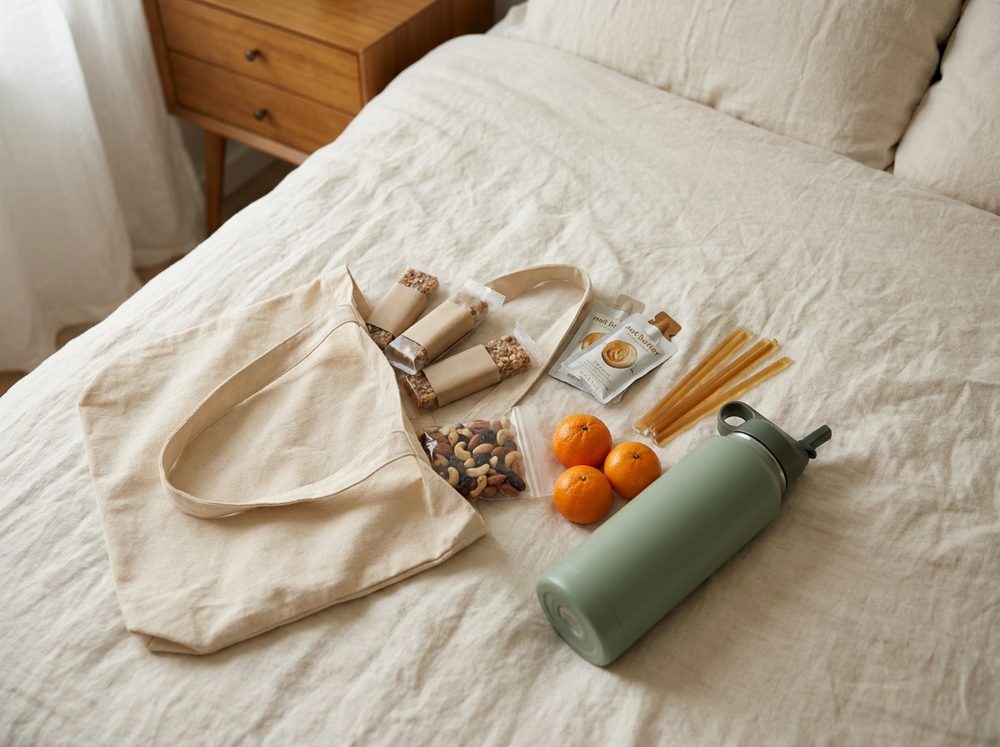
Shelf-stable, one-handed, and packed where you can actually reach it — that's the whole strategy.
Quick answer: pack shelf-stable, one-handed, protein-forward snacks — bars, nut butter squeeze packets, trail mix, meat sticks, nut-butter crackers, dried fruit — plus electrolyte packets and a big insulated water bottle with a straw. Roughly two days' worth for you and the same again for your partner covers most stays. Everything should open with one hand, in the dark, without a fork.
Here's the thing nobody warns you about: hospitals feed you on their schedule, not yours. Meal trays arrive at fixed times, cafeterias close, and you may deliver at 2 a.m. and be ravenous by 3. Your support person, meanwhile, is usually fed by nobody at all. Packing snacks isn't about the food being fancy — it's about not being hungry and stuck at the exact moment you can't get up.
This post contains affiliate links. If you buy through them, we may earn a small commission — at no extra cost to you. We only point to things we'd actually tell a friend to get.
The three rules that make a snack hospital-worthy
Before the list, the filter. A good hospital-bag snack is:
- Shelf-stable. No fridge required, no melting, no ice packs to manage while you're in labor.
- One-handed. If it needs a fork, a plate, or two hands to open, it's the wrong snack. You will be holding a baby.
- Steadying, not just sweet. Something with protein or fat alongside the carbs so it holds you for more than twenty minutes.
Run every candidate through those three and packing gets easy.
The snacks to actually pack
This is the working list. You don't need all of it — pick six or seven you genuinely like, because tired-you will not suddenly enjoy a flavor you tolerate.
- Protein or granola bars — the backbone of the bag. Bring a variety pack so you're not stuck with one flavor for three days.
- Nut butter squeeze packets — genuinely the best one-handed food there is. No spoon, no jar, no mess.
- Individual trail mix packs — pre-portioned so you don't spill a family-size bag into the hospital bed at 4 a.m.
- Meat sticks or jerky — savory protein, zero prep. A relief when everything else in the bag is sweet.
- Nut-butter cracker packs — the classic "I need something in my stomach right now" snack.
- Dried fruit — dried apricots, prunes, and mango travel well and add fiber, which your postpartum self will appreciate.
- Instant oatmeal cups — hot water is the one thing every hospital floor has. A warm breakfast that isn't the tray.
- Fruit or applesauce pouches — easy when nothing solid sounds appealing, and they don't bruise in a bag.
- Ginger chews or hard candy — some Mamas like having something to suck on during a long labor. Check your hospital's policy first.
How much food should I actually pack?
About two days' worth per person. Most vaginal births mean one to two nights; a cesarean is typically two to four. But you're supplementing hospital meals, not replacing them — eight to twelve snacks for you and a similar stash for your partner is plenty. Someone can always run home. Over-packing food is how bags get too heavy to carry while you're contracting.
Can I eat during labor?
Ask your provider — policies vary a lot by hospital and by your specific situation. Some units allow clear liquids only, some allow light snacks in early labor, and some restrict food entirely, particularly if there's any chance of anesthesia. This is a question for your care team at a prenatal appointment, not for the internet. Pack the snacks regardless: if you can't eat during labor, you'll want them the second you can.
What should I eat right after giving birth?
Whatever sounds good and is within arm's reach. A lot of Mamas are properly hungry after delivery, and the next meal tray may be hours out. Something with protein and carbs together — a bar plus a clementine, crackers with nut butter — tends to sit well and can be eaten with a baby on your chest. Don't overthink the nutrition math here; eating at all is the win.
What should my partner pack?
Their own stash, in their own bag. This is the most commonly skipped step and the one people regret. Hospitals feed the birthing parent; the support person is on their own, and cafeterias have hours. Give them filling, low-mess food — meat sticks, trail mix, a sandwich for day one, oatmeal cups — so they don't vanish for 45 minutes hunting down a vending machine during the exact hour you need them.
If they're the type who likes a checklist, we made them one for the week you come home: what your partner should stock the kitchen with before baby.
Coming home to an empty fridge is the avoidable one
10 Make-Ahead Meals for New Mamas — freezer-friendly, one-handed, made in a couple of afternoons before baby comes.
See the guide →What snacks are best for night feeds in the hospital?
Anything you can open and eat one-handed, in the dark, without waking anyone. Bars, nut butter packets, and pre-portioned trail mix win. Loud wrappers and anything requiring a utensil lose. The real trick is placement: move a few snacks and your water bottle to the bedside table before you fall asleep, because at 3 a.m. the bag across the room might as well be in another state. It's the same logic as a good feeding station at home — and the same one-handed snacks work in both places.
Do I need to bring my own drinks?
Hospitals give you water and usually endless ice, but a large insulated bottle with a straw is one of the highest-value things in the whole bag. Little cups run dry, and a straw means you can drink while lying flat or feeding. Electrolyte drink packets are a nice extra when plain water gets dull. Drink to thirst — you don't need to hit a magic number of ounces.
What if I'm having a C-section?
Same snacks, a bit more of them, and pay extra attention to placement. Cesarean stays usually run longer and you'll be less mobile for the first day or two, so anything you might want should sit on the bedside table rather than requiring a twist or a reach. Your care team will tell you when and what you can eat after surgery — follow their guidance over any packing list, including this one.
Should I bring a cooler or perishable food?
Keep the main bag shelf-stable. A small soft cooler bag with cheese sticks, yogurt, or cut fruit is a genuine treat for day one, but you can't count on fridge space and nobody wants to be managing ice packs mid-labor. Better plan: have a visitor bring the fresh stuff on day two, when you know what you're actually craving.
What should I skip?
Anything strongly smelly (your roommate and your own postpartum nose will thank you), anything messy or crumbly, anything needing a fork and a flat surface, and glass containers — most hospitals discourage them. Also skip the candy-only bag: sugar with nothing to steady it makes the crash worse, and you have enough going on.
Do I need special lactation snacks?
No. Lactation cookies and bars are, practically speaking, snacks — and a regular protein bar does the same job of getting food into you between feeds. If milk supply is on your mind, that's a conversation for an IBCLC or your provider, not a package label. We dug into the evidence here: do lactation snacks actually work?
What should be waiting at home?
At minimum: one dinner in the freezer you can reheat one-handed, and a snack basket next to wherever you'll be feeding the baby. The hospital stay is a few days. The hungry, exhausted, nobody-brought-dinner stretch is the next six weeks — and that's the part worth prepping. If you have a free weekend before your due date, our postpartum freezer meal plan walks through what actually freezes well.
Try one of our make-ahead meals free
A full recipe from the Nourished Mamma kitchen — freezer-friendly, one-handed, and waiting for you when you get home.
Get the free sample →This article is educational and not medical advice. Hospital policies on eating during labor and after surgery vary — follow your care team's guidance. For questions about your nutrition, recovery, or milk supply, please talk to your healthcare provider or an IBCLC. As an Amazon Associate we earn from qualifying purchases.