Mama Questions
What Should My Partner Stock the Kitchen With Before Baby?
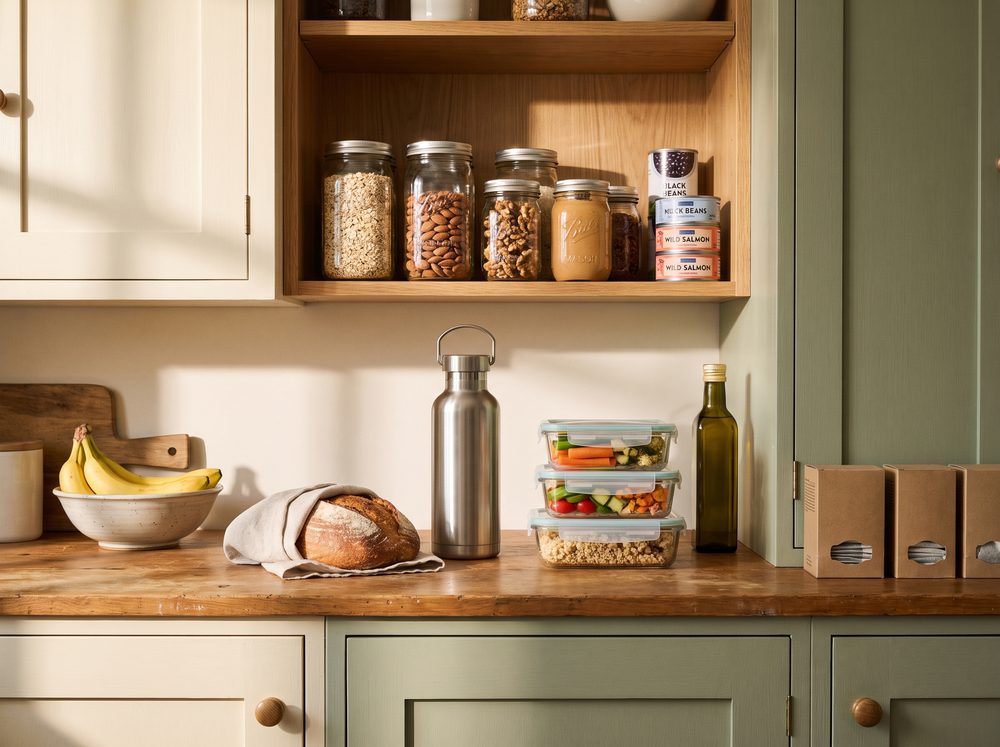
Hand your partner one list, and dinner is handled before the newborn fog even hits.
Quick answer: stock for grab-and-go fuel, not gourmet cooking. That means pantry protein and carbs (oats, canned beans, canned salmon or tuna, nut butter, olive oil, broth), a freezer full of ready-to-reheat dinners, one-handed snacks at every feeding spot, and plenty to drink within arm's reach. If your partner does nothing else, a stocked freezer and a snack basket carry you through the hardest first weeks.
Here's the good news: this is a job you can fully hand off. Feeding yourself after a newborn arrives isn't about cooking well — it's about food being already there when you're pinned under a sleeping baby and haven't eaten since breakfast. So the real gift isn't a recipe; it's a partner who stocks the kitchen so future-you just reaches and eats. Copy the list below, send it to your person, and let them own it.
This post contains affiliate links. If you buy through them, we may earn a small commission — at no extra cost to you. We only point to things we'd actually tell a friend to get.
What pantry staples should we buy before baby comes?
Focus on shelf-stable protein, whole-grain carbs, and easy fats — the building blocks of a real meal with zero fresh cooking. Load the cart with rolled oats, canned beans and lentils, canned salmon or tuna, nut butter, olive oil, and a few boxes of low-sodium broth. Round it out with whole-grain crackers, dried fruit, and nuts. Every one of these keeps for months and turns into a no-cook or one-pot meal in minutes.
What should we put in the freezer before baby?
Portioned, reheatable dinners are the single best thing in your freezer. Soups, stews, chili, casseroles, baked pasta, and slow-cooker dump bags all freeze and reheat beautifully. Freeze them flat in labeled freezer bags or single-serve glass meal-prep containers so any exhausted adult can heat one with one hand. If you're not sure how far ahead to prep, we broke down exactly how long freezer meals last so nothing goes to waste — and our postpartum freezer-meals guide walks through the batch-cooking part.
Want the freezer part done for you?
Grab a free sample of our make-ahead meals for new Mamas — real dinners, freezer-friendly and one-handed. The exact thing your partner should be batch-cooking.
Get the free sample →What snacks should my partner keep stocked for nursing?
Anything you can eat with one hand while the other holds a baby. Think trail mix, protein bars, cheese sticks, nut-butter packets, whole-grain crackers, and fruit. Have your partner pre-portion them into small snack containers on a calm day, then keep a basket at every spot where you feed. We went deeper on what makes a snack actually work in one-handed snacks for nursing Mamas.
What drinks should we have on hand while breastfeeding?
Mostly water — kept within arm's reach of every feeding spot, because nursing thirst sneaks up on you and it's easy to forget for hours. The fix that works is a big insulated water bottle with a straw you can sip one-handed, refilled every time you sit down to feed. Stock a little variety too — caffeine-free herbal teas, sparkling water, a box of electrolyte packets. Drink to thirst rather than to any magic number, and check with your provider or an IBCLC before adding any supplement. We covered the whole approach in how to stay hydrated while breastfeeding.
How much food should we actually stock up on?
Plan for roughly the first four to six weeks — the stretch when leaving the house feels impossible. In practice that's about 10 to 20 freezer dinners, two to three weeks of pantry staples, and a generous restock of snacks and drinks. You're not building a bunker; you're buying enough that nobody has to run to the store during the rawest early days.
What kitchen tools does my partner need to set up?
A short list does almost all the work: a slow cooker or electric pressure cooker, glass meal-prep containers, freezer bags and removable labels, a big water bottle, and a couple of snack bins. No new gadgets required. If you want the full rundown of what earns its counter space (and what doesn't), here's our postpartum kitchen starter kit.
What should my partner cook or prep ahead?
Big-batch, freezer-friendly meals beat anything fancy. A double batch of chili or soup, a tray of baked pasta cut into portions, a dozen breakfast egg muffins, and a few jars of overnight oats will feed you for days. The rule of thumb: if it reheats into a real meal in minutes, it's worth the freezer space; if it needs a cutting board and full attention, save it for later.
How can my partner help in the kitchen after baby arrives?
Give them the invisible, never-ending jobs — because those are the ones that actually keep you fed. Refilling your water bottle, restocking the snack basket, plating leftovers, running dishes, and owning the grocery run add up to real postpartum support. A partner who keeps food and water flowing without being asked is doing some of the most valuable work in the house.
Do we need special "lactation" foods stocked?
No — you don't need any special food to nurse. Regular nourishing meals and enough to drink are what matter most. Oats, nuts, and seeds show up in a lot of nursing snacks simply because they're filling, cheap, and easy to eat one-handed, not because any single food is required. If you have questions about milk supply or your own nutrition, bring them to your provider or an IBCLC rather than trusting food claims online — that's genuinely the best use of your energy here.
What should we NOT bother stocking up on?
Skip fussy ingredients for recipes you won't have the energy to make, single-use gadgets, and bulk perishables that'll spoil before you reach them. Baby-food makers and elaborate meal kits can wait months. Right now, counter space and energy are the scarce resources — a smaller list of simple, reheatable staples will serve you far better than an overflowing fridge.
One list. Dinner handled for six weeks.
Real-Mama Q&A, make-ahead recipes, and nutrition research land in your inbox every Tuesday. Try the Nourished Mamma Weekly for $1 your first month.
Try the Weekly for $1 →Prefer a paperback on the shelf your partner can cook straight from? The full Nourished Mamma Cookbook is on Amazon.
This article is educational and not medical advice. For decisions about your nutrition, recovery, or milk supply, please talk to your healthcare provider or an IBCLC. As an Amazon Associate we earn from qualifying purchases.